
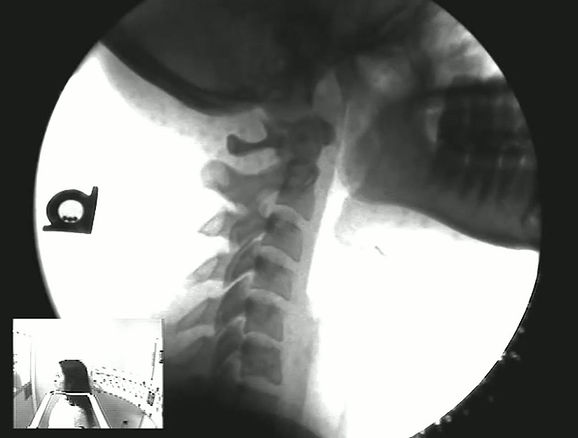
Digital Motion X-Ray (DMX)
What is a digital motion x-ray (DMX)?
A DMX is a dynamic type of imaging that can actually show HOW your spine moves. It's like an x-ray movie. A scan is produced in real time, while the person is moving. This allows us to see true movement disorders and injuries that would otherwise be missed. A DMX can show spinal and peripheral joint instability from ligament damage. Pain typically occurs with motion with these types of injuries. By being able to see the bones in motion, DMX picks up the abnormal or excessive motion whereas MRI, CT scan and static x-rays do not.

Why a DMX?
Many injuries are difficult to see without movement, especially injuries to the upper cervical region. One of the most significant injuries we treat at this office is spinal instability. Stress x-rays give us an idea of vertebral movement, but many times these studies are limited due to patient pain or positioning. It's very difficult for a patient to hold a painful position for many seconds without recoiling back to a "less painful" position.
A DMX gives a true evaluation of spinal movement and the detection of spinal instability. Spinal instabilities are one of, if not the most commonly missed injury in spinal trauma. Cranio-cervical instability, or CCI, occurs when ligaments in the upper neck tear or become stretched. This injury can be very severe, cause significant neurological symptoms, and also mimic symptoms of concussion.
DMX is essential in the diagnosis of spinal ligament injuries. In fact, some spinal surgeons require a DMX before they will do a consultation for spinal surgery.
